
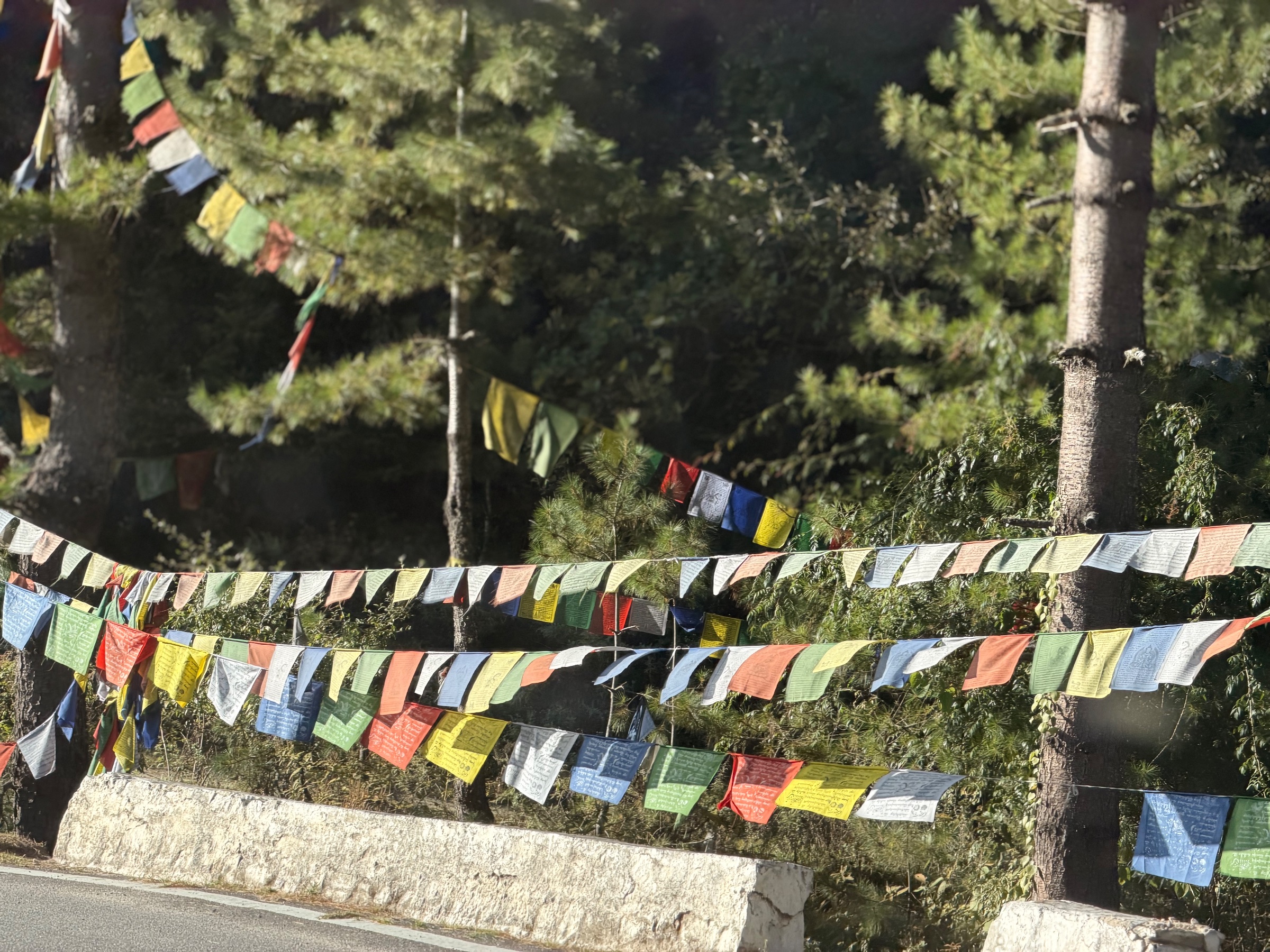
Lung Dhar in Bhutan: Meaning of Sacred Prayer Flags
5 min read
Discover the spiritual meaning, five sacred colours, and ancient Buddhist traditions behind Bhutan's beautiful Lung Dhar prayer flags.
When you travel through Bhutan, one of the most beautiful sights you will encounter is the colourful prayer flags dancing in the Himalayan breeze. From mountain passes and peaceful monasteries to riverside valleys and sacred pilgrimage trails, these flags are an inseparable part of Bhutan's cultural and spiritual landscape.
Known as Lung Dhar (Lungdhar), these traditional Bhutanese prayer flags are far more than colourful decorations. They represent centuries of Buddhist faith, compassion, spiritual protection, and the deep connection between humanity and nature.
In Bhutan, people believe that when the wind touches these sacred flags, it carries their printed prayers and blessings across the mountains and valleys, spreading peace, happiness, and goodwill to all living beings.
For travellers seeking an authentic Bhutanese cultural experience, understanding Lung Dhar offers a beautiful introduction to the spiritual heart of the Land of Happiness.
What Is Lung Dhar in Bhutan?
Lung Dhar refers to the colourful Buddhist prayer flags traditionally displayed horizontally or diagonally on strings between trees, poles, bridges, monasteries, and other sacred places.
The flags are printed with Buddhist mantras, sacred symbols, and prayers for good fortune, health, prosperity, and the well-being of all sentient beings.
A familiar symbol on many Lung Dhar flags is the Wind Horse (Lungta), representing spiritual energy, strength, and the movement of good fortune.
Unlike ordinary flags that represent nations or institutions, Lung Dhar carries a universal message: prayers and blessings should benefit everyone, regardless of who they are or where they live.
This makes Bhutanese prayer flags one of the most meaningful expressions of the country's Buddhist heritage.
The Spiritual Meaning of Lung Dhar Prayer Flags
In Bhutanese Buddhist tradition, wind is seen as a powerful carrier of spiritual blessings.
When Lung Dhar is placed in a location where the wind can move freely, each flutter is believed to spread the sacred mantras and prayers printed on the fabric.
The practice reflects several important Buddhist values:
Compassion: Sharing prayers and good wishes with all living beings.
Peace: Encouraging harmony within ourselves and the world around us.
Good Fortune: Invoking favourable circumstances and spiritual well-being.
Protection: Seeking blessings against obstacles and negative influences.
Interconnectedness: Recognising the relationship between humans, nature, and all sentient beings.
For Bhutanese communities, raising prayer flags is both a spiritual offering and an expression of hope for the future.
The Five Sacred Colours of Lung Dhar and Their Meanings
One of the most recognisable features of Lung Dhar is its five vibrant colours.
These colours represent the five elements of nature and symbolise the importance of maintaining balance and harmony in life.
Colour
Element
Symbolic Meaning
Blue
Sky or space
Openness and vastness
White
Air or wind
Purity and clarity
Red
Fire
Energy and transformation
Green
Water
Life and harmony
Yellow
Earth
Stability and grounding
The colours also carry additional religious associations depending on the prayers and traditions involved.
Together, these five colours remind us that human life is interconnected with the natural environment.
In Bhutan, where Buddhist philosophy and environmental conservation are deeply valued, this symbolism holds special significance.
Lung Dhar and the Wind Horse: A Symbol of Good Fortune
At the centre of many traditional Bhutanese prayer flags is an image of the Wind Horse, known as Lungta.
The Wind Horse is an important symbol in Himalayan Buddhism, representing vitality, positive energy, and the swift movement of auspicious blessings.
It often carries the Three Jewels of Buddhism:
Buddha: The enlightened teacher.
Dharma: The teachings of Buddhism.
Sangha: The spiritual community.
The Wind Horse is sometimes surrounded by four powerful symbolic animals: the tiger, snow lion, garuda, and dragon.
These sacred images and prayers illustrate the richness of Bhutanese Buddhist artistic and spiritual traditions.
Where Can You See Lung Dhar Prayer Flags in Bhutan?
One of the most rewarding parts of travelling through Bhutan is discovering how naturally Buddhist traditions blend into everyday life.
Visitors can encounter prayer flags throughout the country, particularly in spiritually significant landscapes.
1. Dochula Pass – Prayer Flags Above the Clouds
Located along the road between Thimphu and Punakha, Dochula Pass is one of Bhutan's most beautiful mountain viewpoints.
Here, colourful prayer flags flutter in the cool mountain wind, creating an atmosphere of peace and reflection.
On clear days, visitors may enjoy spectacular views of Bhutan's snow-covered Himalayan peaks.
2. Paro Valley – Spirituality and Natural Beauty
Paro is home to some of Bhutan's most treasured religious landmarks, including the famous Tiger's Nest Monastery, also known as Paro Taktsang.
Along its hiking trails and surrounding sacred sites, visitors will often encounter prayer flags carrying the aspirations of generations of Buddhist practitioners.
3. Punakha – Prayer Flags Along Rivers and Sacred Sites
The beautiful Punakha Valley, where the Pho Chhu and Mo Chhu rivers meet, provides another wonderful setting for observing Bhutanese Buddhist traditions.
Prayer flags can be seen near temples, bridges, villages, and religious landmarks throughout the valley.
4. Bumthang – The Spiritual Heartland of Bhutan
Bumthang is celebrated for its ancient temples, monasteries, and sacred pilgrimage destinations.
For travellers interested in Bhutanese Buddhism, this region offers opportunities to explore the relationship between prayer flags, traditional rituals, and Bhutan's living spiritual heritage.
Why Do Bhutanese People Raise Lung Dhar?
For many Bhutanese families, raising Lung Dhar is a meaningful spiritual practice associated with prayers for well-being, success, protection, and positive energy.
Some families consult astrologers or religious practitioners to select an auspicious day for raising new prayer flags.
Lung Dhar may be raised during important life events, religious occasions, or times when people wish to overcome difficulties and invite favourable circumstances.
As the flags are exposed to sunlight, rainfall, and wind, their colours gradually fade.
Rather than simply viewing this as deterioration, many practitioners understand the gradual weathering of the flags as a reminder of impermanence, an important Buddhist teaching.
Lung Dhar vs. Darchog: Understanding Bhutan's Prayer Flags
Visitors often notice two distinct styles of Buddhist prayer flags in Bhutan.
Lung Dhar: Smaller, colourful rectangular flags connected along a string and hung horizontally or diagonally. They commonly feature the Wind Horse, mantras, and sacred symbols.
Darchog (Darshing): Tall vertical prayer flags attached to wooden poles and erected near mountains, temples, villages, and other spiritually significant places.
Both reflect Buddhist devotion and the belief that sacred prayers can spread blessings through the natural movement of the wind.
How Tourists Can Respect Bhutanese Prayer Flag Traditions
When visiting Bhutan, travellers are encouraged to appreciate prayer flags as sacred cultural objects rather than ordinary decorations.
Avoid stepping on prayer flags, disturbing religious offerings, or removing flags from their original locations.
Visitors interested in raising Lung Dhar should seek guidance from a knowledgeable Bhutanese guide or local religious practitioner to understand the appropriate customs and auspicious practices.
Respecting these traditions allows travellers to build a deeper connection with Bhutan's spiritual heritage.
Experience the Spiritual Beauty of Bhutan with DTT Bhutan
Bhutan is more than a destination of majestic mountains, ancient monasteries, and breathtaking landscapes. It is a country where spirituality continues to influence everyday life.
The gentle movement of Lung Dhar in the Himalayan breeze tells a story of compassion, harmony, and a culture that values the happiness and well-being of all living beings.
At DTT Bhutan – Droelma Tours and Travels, we believe that discovering Bhutan means experiencing the traditions, people, and stories that make the country truly special.
Our Bhutan cultural tours, spiritual journeys, and customized travel experiences offer visitors opportunities to explore sacred monasteries, beautiful valleys, traditional villages, and the living Buddhist heritage of the Himalayan kingdom.
Whether you are planning a Bhutan cultural holiday, a spiritual pilgrimage, or a unique Himalayan adventure, we are here to help you discover the authentic spirit of Bhutan.
DTT Bhutan – Best Way to Feel Bhutan
Website: https://dttbhutan.com
Contact: +975 17684815
Email: chhimisyelden@gmail.com
Discover Bhutan beyond the mountains. Experience the culture, embrace the spirituality, and let the Himalayan winds tell their stories.
Frequently Asked Questions About Lung Dhar in Bhutan
What does Lung Dhar mean in Bhutan?
Lung Dhar refers to traditional Bhutanese Buddhist prayer flags, usually displayed horizontally or diagonally in colourful strings. They are believed to spread blessings, peace, and positive energy through the wind.
What are the five colours of Bhutanese prayer flags?
The five traditional colours are blue, white, red, green, and yellow. They represent the five natural elements and symbolise harmony and balance.
Why are prayer flags placed on mountains in Bhutan?
Prayer flags are often displayed in windy locations because Buddhists believe the wind carries their printed prayers and blessings across the landscape for the benefit of all living beings.
Can tourists raise Lung Dhar in Bhutan?
Visitors may be able to participate in prayer flag offerings with appropriate local guidance, depending on the location and religious customs.
Where can tourists see prayer flags in Bhutan?
Prayer flags are commonly found at Dochula Pass, Paro, Punakha, Bumthang, monasteries, bridges, and mountain trails throughout the country.
Are Lung Dhar and Lungta the same?
The terms are closely related. Lung Dhar generally describes the horizontal prayer flags, while Lungta refers to the Wind Horse symbol associated with many of these flags. The names are sometimes used interchangeably.
Why do Bhutanese prayer flags fade?
Prayer flags naturally fade through exposure to sunlight, wind, and rain. Their weathering is often understood as a reminder of impermanence in Buddhist philosophy.
Planning a trip to Bhutan?
Browse our tour packages, or tell us what you have in mind and we'll build a custom itinerary.